
Profit sharing plans for small businesses in Canada, outside Quebec
Pay your year-end bonus without CPP or EI
Employees Plan pays your bonus pool through an Employee Profit Sharing Plan instead of payroll. A 7-person crew sharing $90,000 in January saves $11,050 in CPP and EI.
- Set out in section 144 of the Income Tax Act
- Your trust's own bank account pays staff
- T4PS slips prepared for you
Illustration: seven workers stand in a line under their bonus bars. Through payroll, a slice of every bar goes to CPP and EI and the company pays its own share on top. Through the plan, six bars arrive whole, most of the owner's bonus still goes through payroll, the company keeps the CPP and EI it would have paid, and the crew takes home more.
What payroll takes from a bonus
Profit sharing plans usually take an accounting or law firm to set up, so most small businesses pay the bonus through payroll. Below the yearly caps, CPP and EI take about 15.8 cents of every bonus dollar, split between you and your staff.
Where the $11,050 goes
- $5,760 stays with your company instead of going to CPP and EI.
- $5,290 more reaches your staff from the same bonus.
Every employee takes home more of the bonus you already planned to pay.
The sample is a 7-person trades crew sharing a $90,000 pool. Change any name, salary or amount.
Bonus pool
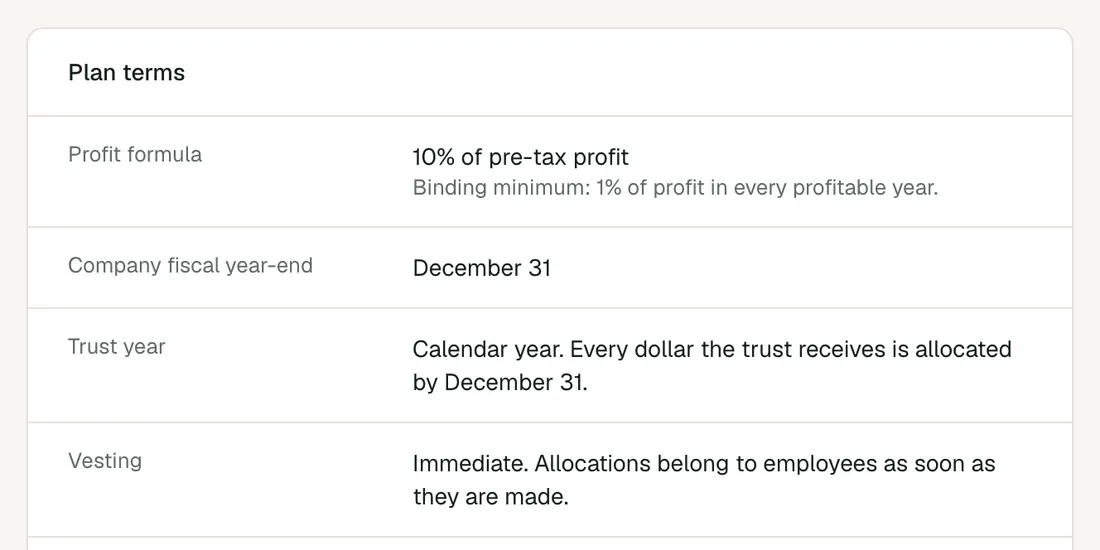
The law requires plan payments to be computed from profits, so your trust deed sets a formula like 15% of pre-tax profit.
Your team
- $
$8,847
- $
$9,868
- $
$10,378
- $
$13,270
- $
$11,059
- $
$16,163
- $
$20,415
We assume each person was paid their salary evenly through the year. Owners with 10% or more of the shares, and their family, count as specified employees under the Income Tax Act.
When the bonus is paid
Net saving, December 2026
$5,926
CPP and EI that you and your staff do not pay, after our 2% fee.
- Your company saves
- $3,614
- Your staff save
- $3,381
- Our 2% fee
- -$1,068
- Goes through the plan
- $53,422 of $90,000
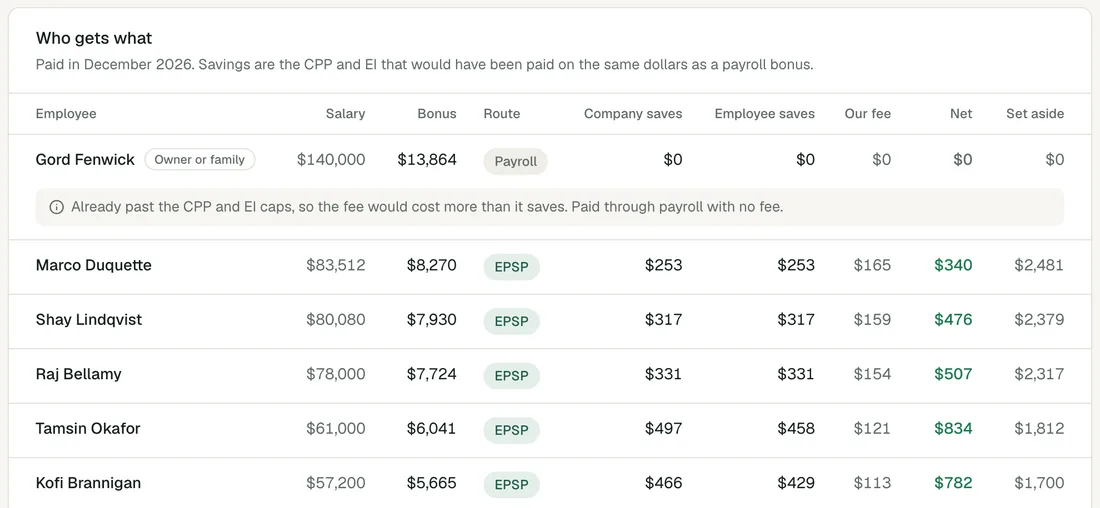
Estimator and Owner have already passed the 2026 CPP and EI caps, so the fee would cost more than the plan saves. Those bonuses are paid through payroll with no fee.
Paying in January saves $3,692 more, because the caps reset on January 1.
Each person, paid in December 2026
Each person
Paid in December 2026 · 7 people
- Installer A$1,222Plan · Bonus $8,847net saving
Company $728 · Staff $671 · Fee $177
- Installer B$1,363Plan · Bonus $9,868net saving
Company $812 · Staff $748 · Fee $197
- Installer C$1,433Plan · Bonus $10,378net saving
Company $854 · Staff $787 · Fee $208
- Crew lead$555Plan · Bonus $13,270net saving
Company $410 · Staff $410 · Fee $265
- Office manager$1,353Plan · Bonus $11,059net saving
Company $809 · Staff $766 · Fee $221
- Estimator$0Payroll · Bonus $16,163net saving
Company $0 · Staff $0 · Fee $0
Past the 2026 CPP and EI caps, so the fee would cost more than it saves. Paid through payroll, no fee.
- Owner$0Payroll · Bonus $20,415net saving
Company $0 · Staff $0 · Fee $0
Past the 2026 CPP and EI caps, so the fee would cost more than it saves. Paid through payroll, no fee.
How it works
Set up the trust deed and trustees once. After that, each year takes four steps.
1Set the profit formula
Choose the share of pre-tax profit that goes to staff, for example 15%. The formula goes into the trust deed, and your trustees sign it online.
2Import payroll
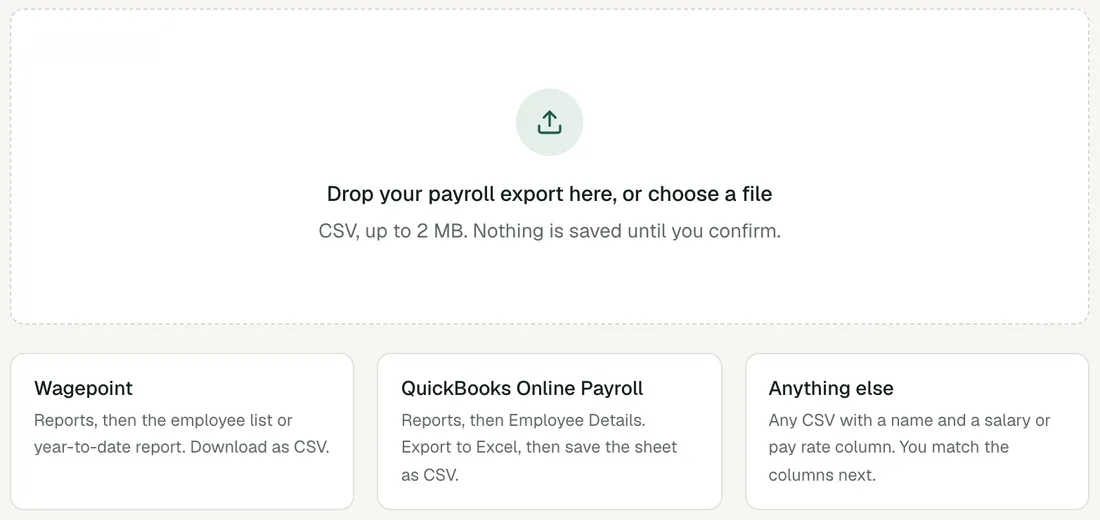
Upload a CSV export from Wagepoint, QuickBooks Payroll or any payroll system. We read each person's salary and what they have earned so far this year.
3Approve the split
We divide the pool and check each person against the CPP and EI caps and the 20% limit for owners and family. You see who goes through the plan, who goes through payroll, and why.
4Trustees pay, we prepare the slips
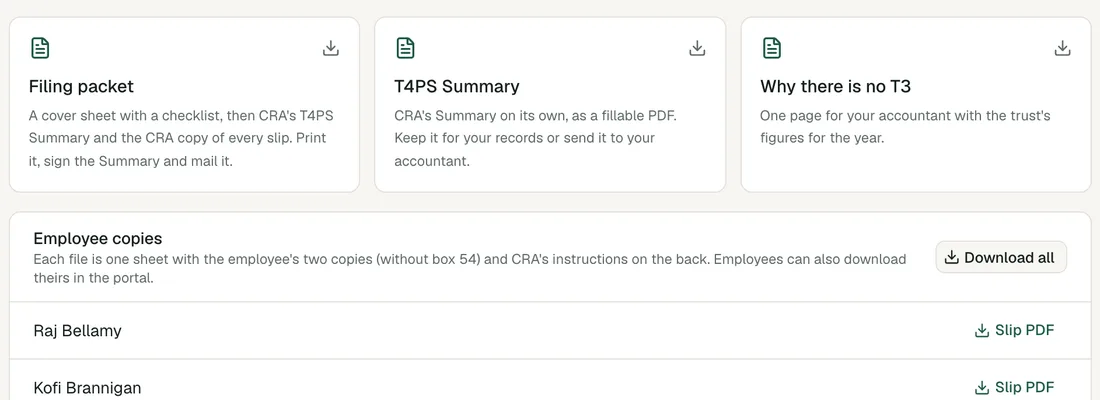
Your trustees pay staff from the trust's bank account with the payment file we generate. We prepare each employee's T4PS slip and the summary, due the last day of February.
Who it is for
Small businesses in Canada outside Quebec that pay a year-end bonus, especially trades crews and other teams where most staff earn under the CPP and EI caps.
- Staff who earn less than $68,900 a year, the 2026 EI cap.
- Bonuses paid in January, when CPP and EI start over for the year.
- Employees who are not owners or family. Their share of the pool has no 20% limit.
- Staff who have already passed the caps when a December bonus is paid. The calculator routes them to payroll.
- Owners with 10% or more of the shares, and their family. Plan money above 20% of their salary is taxed at the top rate, and a January payout counts only salary from the new year.
- Businesses in Quebec, which runs its own pension plan. We do not serve Quebec yet.
The sample crew shows both sides. In December, 2 of 7 people have passed the caps and are paid through payroll, and the plan saves $5,926. In January the caps reset and the plan saves $9,618, but most of the owner's bonus goes through payroll because of the 20% limit.
What it costs
You pay a share of what each plan handles. There is no setup fee, monthly fee or minimum.
Profit sharing plan
2%
of the money that goes through the plan
If the plan would not save someone money, they are paid through payroll and we charge nothing on their share. For the sample crew paid in January, the fee is $1,432 on $71,585, and the plan saves $11,050 in CPP and EI.
Health spending account
6%
of each health claim you approve
There is nothing to prefund. You pay each claim after you approve it, plus the fee. A $240 dental cleaning costs you $254.40 in total.
Limits you should know
- Not legal or tax advice
- We make software. We are not a law firm or an accounting firm, so check your plan with your accountant before the first payout.
- We never hold your money
- Your company pays the trust, and the trust's own bank account pays your staff. We generate the payment file and the paperwork.
- The CPP and EI saving rests on case law
- No statute names plan payments as exempt from CPP and EI. The saving rests on how those rules are worded, CRA's published guide and a 2007 Tax Court decision. Ask your accountant about this risk before you rely on it.
- Owners and family are limited
- Section 207.8 of the Income Tax Act taxes plan money above 20% of salary at the top rate for owners with 10% or more of the shares and their family. We route that excess through payroll.
- No tax is withheld
- Staff owe income tax on plan payments when they file their return. Each statement shows an amount to set aside.
- Provincial payroll taxes still apply
- The plan saves CPP and EI only. Employer taxes such as Ontario's Employer Health Tax are still due on plan payments.
- No CPP or EI credit
- Plan payments do not count toward an employee's CPP pension or EI benefits.
Sources
- Income Tax Act, section 144 (employees profit sharing plans)
- Income Tax Act, section 207.8 (tax on excess EPSP amounts)
- Allan A. Greber Professional Corporation v. M.N.R., 2007 TCC 78
- Income Tax Regulations, section 205 (filing due date)
- CRA: T4PS slip, Statement of Employees Profit Sharing Plan Allocations and Payments
Health spending account
Cover staff health and dental costs as they happen. An employee uploads a receipt, you approve it, and you pay the claim plus our 6% fee.
You set a yearly limit for each class of employee. We check every claim against the CRA list of eligible medical expenses and the employee's limit before it reaches you. Unused limits never turn into cash.
Dental cleaning
Employee claim, receipt attached
- Claim
- $240.00
- Our fee (6%)
- $14.40
- You pay
- $254.40
Questions
Is an EPSP legal in Canada?
Yes. Employee profit sharing plans are set out in section 144 of the Income Tax Act. Payments must be computed from the company's profits, which is why every plan starts with a profit formula written into the trust deed.
Do I need to register the plan with CRA?
No. CRA does not register or approve these plans. You need a trust deed, trustees, a full allocation of the money each year, and T4PS slips filed by the last day of February.
Do employees pay income tax on plan payments?
Yes. Plan payments are taxable income, but no tax is withheld when they are paid. Each employee's statement shows an amount to set aside for their tax return.
Why does January save more than December?
By December most staff have already paid CPP and EI up to the yearly caps, so there is less left to save. On January 1 the caps reset. The sample crew saves $5,926 in December and $9,618 in January.
Can an employee choose cash instead?
No. If staff can pick between a cash bonus and the plan, CRA can treat the plan money as salary. Set up the plan before you promise a bonus, and pay the bonus only through the plan.
Do you hold or move our money?
No. Your company pays into the trust's bank account, and the trustees pay staff from it. We generate the payment file, the statements and the tax slips.
What does it cost if the plan saves nothing?
Nothing. We charge 2% only on money that goes through the plan. Anyone the plan would not help is paid through payroll, with no fee on their share.
Does it work in Quebec?
No. Quebec runs its own pension plan and parental insurance, so we serve the rest of Canada for now.
Set up the plan before you announce the bonus
The plan has to exist before staff hear about the bonus, and opening the trust's bank account takes time. To pay in January 2027, start in December.
Set up your planUpdated